From: € 3710
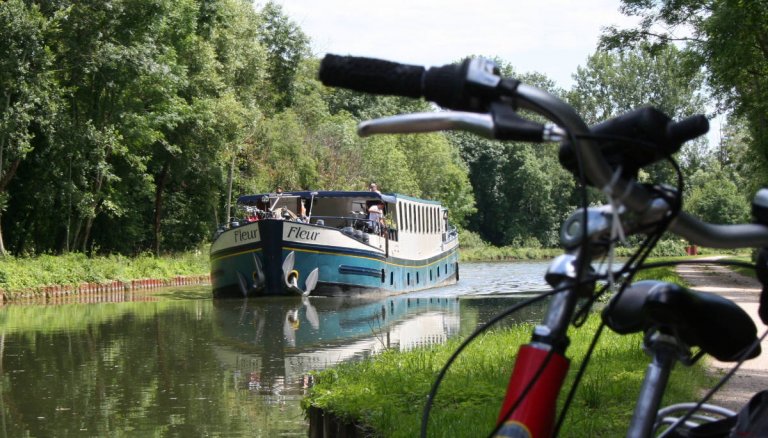
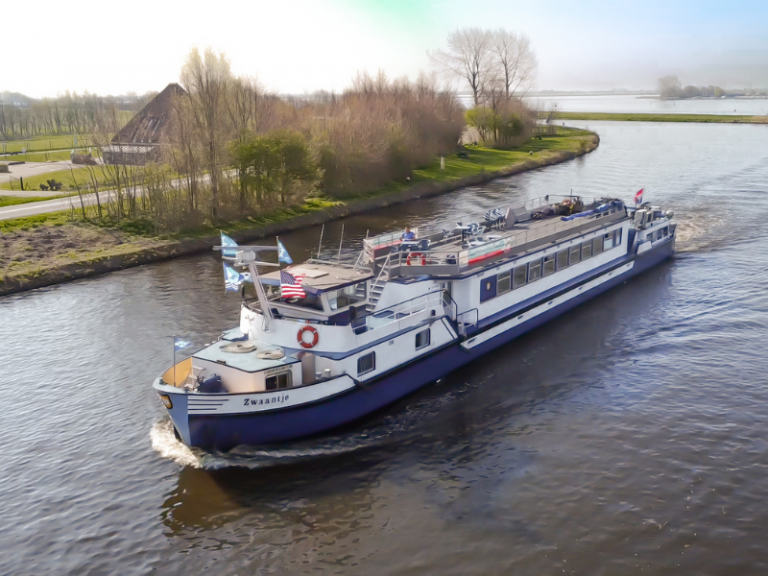
During this 15 day bike & barge trip through Northern of France and Flanders (Belgium), from Paris to Bruges, you will cycle through attractive areas, not yet discovered by mass tourism. This tour is characterized by a wide variation in landscapes. All the ingredients a good bike & barge tour needs to explore these interesting regions.
With departure from Paris ‘the City of Lights’ you’ll cycle along World War I battle fields and memorials in the Somme valley, the Chateau de Chantilly and its art gallery the Musée Condé that houses one of the finest collections of paintings in France.
Cycling in Belgium will be a beautiful discovery tour, history in medieval Ghent, tapestry in Oudenaarde, Vincent van Gogh’s heritage, a nice Belgium beer at end of your daily cycling tour with your final destination of magnificent Bruges.
The cycling tours go over gently forested undulations and across open farm land, along the rivers Scheldt, Somme, Oise andSeine; the Belgian-French border also appears to be more or less the watershed between the river basins of Scheldt and Seine.
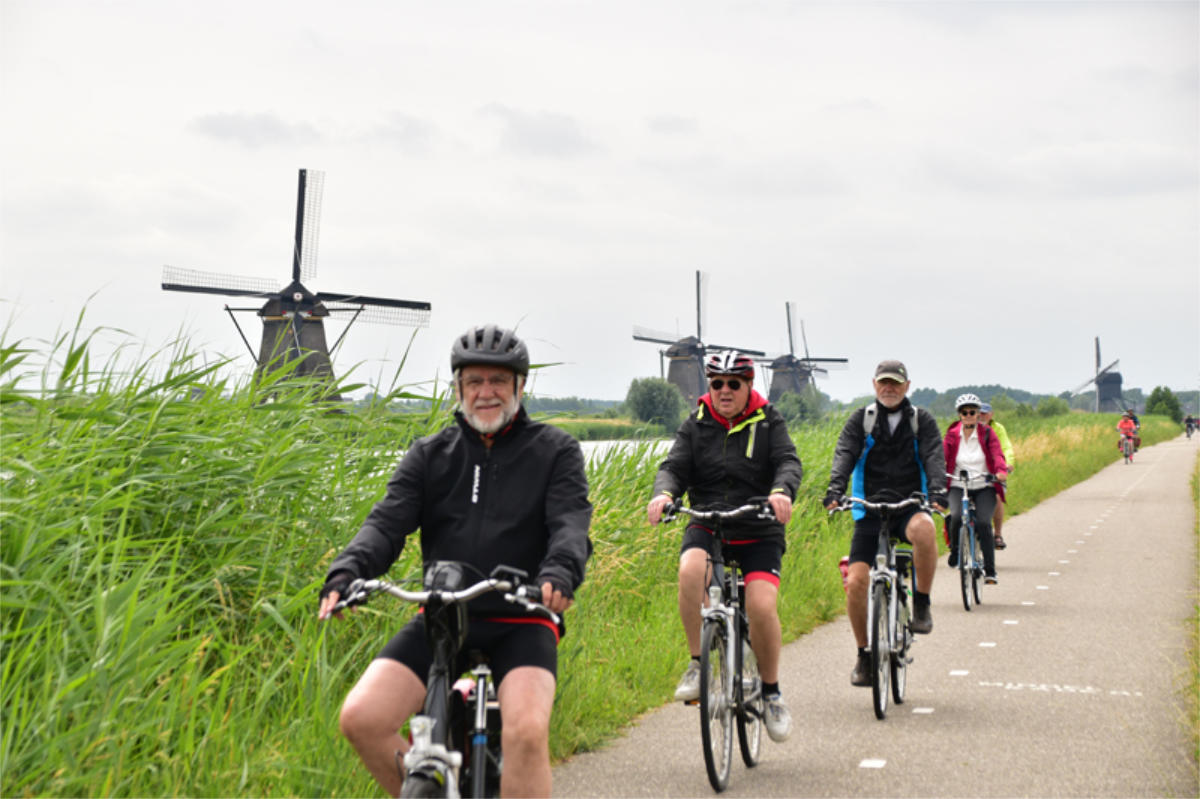
This tour is offered exclusively with electric bikes.
We advise you to come to Paris one or more days earlier, so that you will have plenty of time to discover the ‘City of Lights’.
REVERSE ROUTE: Bruges to Paris
This tour is offered exclusively with electric bikes.
E-Bike of the brand Gudereit EC-4 with 8-gear, handbrakes. Lock and pannier bag, Bike helmets are available on board.
The cook prepares all meals: a substantial breakfast and a three-course dinner of very good quality. A packed lunch may be prepared after breakfast. Tea and coffee will be ready when you arrive on board in the afternoon. There’s a bar on the boat with beer, wine, and soft drinks at reasonable prices. If you have special meal requirements, please mention this when booking. In the case of a Vegetarian and gluten-free diet there is an additional charge of €50 per week. You’ll need to pay this cash on board.
The accommodations listed below are examples of those usually used on the tour. Depending on availability, you may be booked in a different accommodation of equal quality.
When you arrive on board the barge in Paris by 2 p.m. you can put your luggage away in your cabin and enjoy a cup of coffee or tea. It’s also a good moment to become acquainted with the guide, skipper and crew – and of course your fellow passengers.
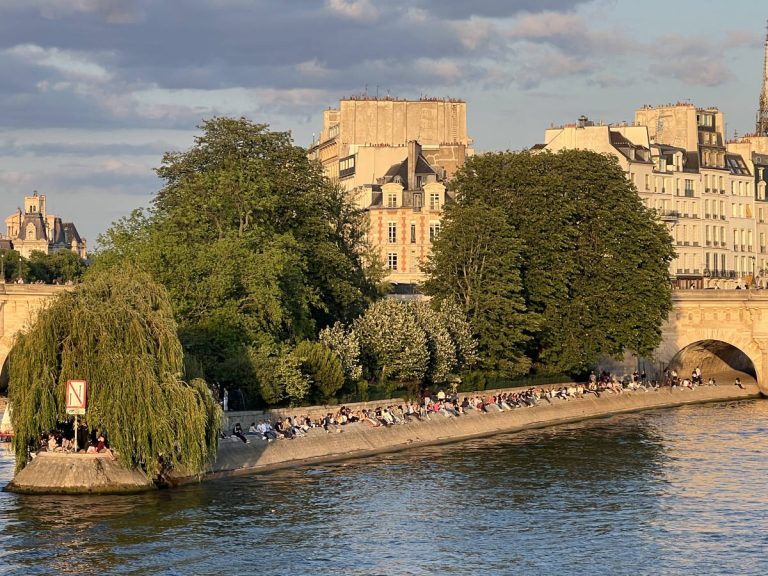
After a welcome by the captain, crew and tour leader the barge will sail right through the city of Paris. Mooring place for the night is in a suburb of Paris. After a sailing dinner there is time for a short walk.
*On some days you can choose between a longer and a shorter cycling route
After breakfast our day start biking on quiet towpaths along the river Seine to the higher situated St. Germain. From the gardens of Le Nôtre we will have a magnificent view across Paris. Next we will ride through a forest area to Conflans for a picnic on the pier. After a short stop at the Pontoise Bridge, we continue cycling across the picturesque Chemin des Monts to the church of Auvers, famous for Van Gogh’s paintings. After dinner on board we will have a short evening walk where we can visit Van Gogh’s grave on the local cemetery.
During breakfast we sail to Beaumont where we will start cycling upstream following the Oise River . We will pass the abbey of Royaumont, one of the best preserved abbeys from the 13th century. In the afternoon we will visit the magnificent castle Chateau de Chantilly, with a horse dressage and its art gallery. The Musée Condé houses one of the finest collections of paintings in France. Our bike tour ends in Creil, from where the barge will take us to the final destination of today, Pont-Ste-Maxence, named in the Middle Ages after one of the few bridges over the Oise River. Pont-Ste-Maxence became the place to stay the night for kings and merchants, who were on their way to Flanders.
Our bike trip of the today starts in Pont-Sainte-Maxence. Not far from here we pass the abbey of Moncel, founded in 1309 by King Philip le Bel. Before we reach our destination Compiègne, we cycle through the forest named after this town “Forêt de Compiègne”. A popular hunting area for French kings. The longer tour ads some more miles of forest and the little town of Pierrefonds, where you can admire the exterior of the impressive castle. Compiègne owes its architectural wealth to the proximity of Paris. The gardens of the Chateau de Compiègne are definitely worth a visit.
Today we will leave the river Oise to continue our trip by way of the canal system connecting France and Belgium. In the morning we cycle into the most northern part of the forest of Compiègne. Here we visit the “Clairière de l’Armistice”, the place where the French and German generals signed the Treaty to end World War I. We can have a look into the small but interesting museum. Hereafter we will cross the river Aisne and cycle through the forest of Ourscamp. In the afternoon we will spend some time in Noyon, where we can visit one of the oldest Cathedrals of the country. After this visit we will cycle back to the canal at Pont l’Évêque, where the barge will be waiting for us.
The first part of your cycling tour goes through the valley of the Somme River. Later you will
continue through the sparsely populated open and rolling landscape to Ruyaulcourt. At the end of WW1 this area was the frontline of the battle around the Somme.
The Canal du Nord has 2 tunnels, where the barge has to sail through. The longest one is the
tunnel of Ruyalcourt, which is 4,350 meters (2.7 miles) long. As soon as are all back on board, the
barge will pass this tunnel. Above the tunnel is the watershed between the rivers Somme and
Escaut (Scheldt). From there the barge therefore goes downhill into the direction of Arleux.
The barge stays the night on the highest point of the Canal du Nord next to farmland.
Our cycling tours leads to the city of Cambrai, once a Roman provincial capital and an important destination for pilgrims. Worth seeing are the impressive restored buildings of the city fortress, built under King Charles V. Then we will cycle through the marshlands of Chantraine to rural Arleux where the barge is waiting for us to sail to the lock of Pont Malin.
Our day will start cruising the barge for a few hours following the Canal du Grand Gabarit, passing through a former industrial area of northern France. Old coal mines and steel sites border the canal. We will start our bicycle ride in Denain. The tour goes through open farm land, through little mining towns towards the French Belgium border.
Once in Belgium we will cycle through the so-called “white land”. The charming little fortress town Antoing lies at the heart of this region and since the Roman days, (white) limestone has been mined here. Today’s destination is Doornik (in French: Tournai), one of the oldest cities of Belgium. Now you are in Wallonia, French speaking Belgium, where all towns and villages have both a French and a Flemish name. Up till the beginning of the 17th century Doornik was ruled by the French. Here, tapestry weaving gained in importance, while the cloth industry became less important. In the various museums of the town, excellent examples can be seen. In 1940 the entire city center was destroyed after a Germanair-raid. However, the town has been renovated splendidly. Especially the cathedral the Notre Dame (12th and 13th century) is worth seeing, as well as the Belfort, which was built at about 1200.
Now the barge sails downstream the river Scheldt and after crossing the language barrier we enter the Flemish region. From here onwards Flemish is the spoken language. Our final destination of today is Oudenaarde. In former days this little town was situated on the border of the French and German Empires and as a result it was involved in wars frequently. Since Oudenaarde was right in the firing-line, there was always someone on the look-out. The statue of the most famous watchman, Hanske de Krijger, is on the splendid looking city hall. In the first half of the 16th century this city hall was built of sandstone in Brabantine late Gothic style and it is one of the most beautiful city halls of Flanders. Oudenaarde is also known as the town of the tapestry weavers. Their tapestry is famous all over the world.
Shortly after starting our cycling tour at Oudenaarde we briefly stop at the ruins of the old abbey of Ename, located atthe river Scheldt. We keep cycling along the river towards Ghent, our destination. Ghent is a lively university town with a rich history. The town arose in Roman days on the confluence of the rivers Leie and Schelde. This favorable location brought on quite some wealth with a peak in the late 13th and early 14th century. The cloth industry was a source of great richness in the late Middle Ages. In the city many patrician residences have been preserved. In the “Lakenhal” – ClothHall – (1425) the cloth traders gathered. The most important church is St. Baafs cathedral, which was constructed indifferent centuries and in different styles. In the cathedral several masterpieces of medieval paintings are to be found. “The Adoration of the Mystic Lamb” by Jan van Eyck is the most famous of all. We can take a city tour by boat or visit the old castle Gravensteen.
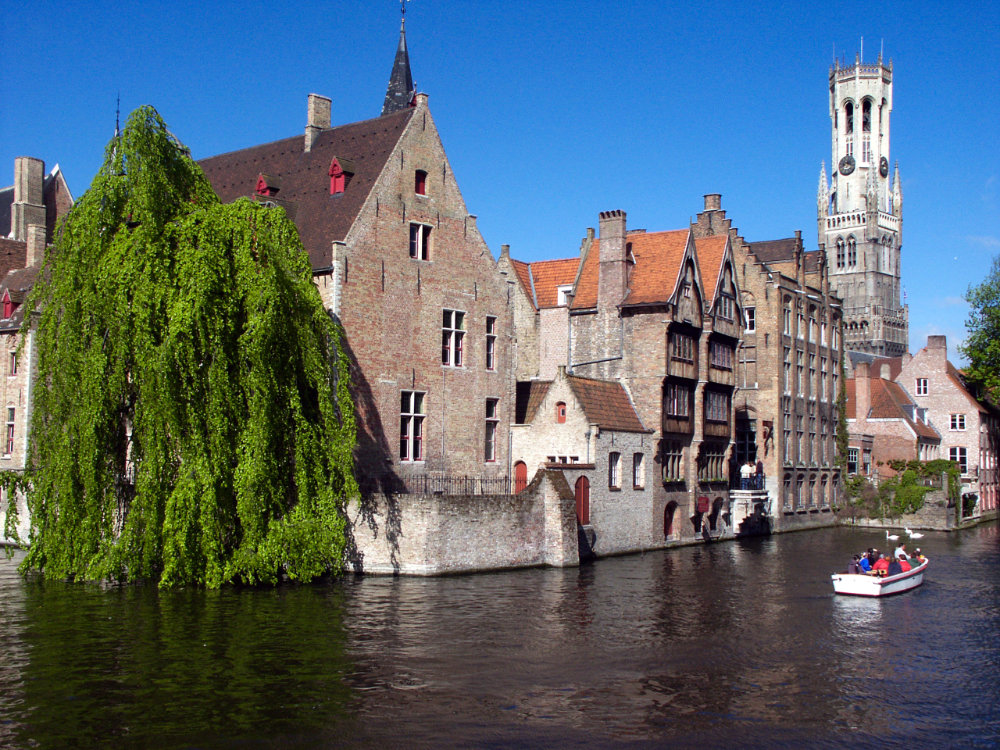
While enjoying breakfast we will cruise the Canal Ghent – Bruges to Aalterbrug. From here we will start our cycling tour, which goes through the pleasant flat country side of Western Flanders to Bruges. Bruges, also called “Venice of the North”, is said to be the most beautiful of all Flemish cities. Its old center, which dates from the Middle Ages, is almost completely intact. In past ages, Bruges was a metropole, center of trade and art, which you can still fully enjoy.
Today our barge will stay in Bruges. An optional bicycle ride through the pleasant countryside around Bruges will be offered. Or you can choose to spend the day in beautiful Bruge, visit a museum or do some shopping.
End of your tour: Disembarkation after breakfast until 9.30 a.m.